
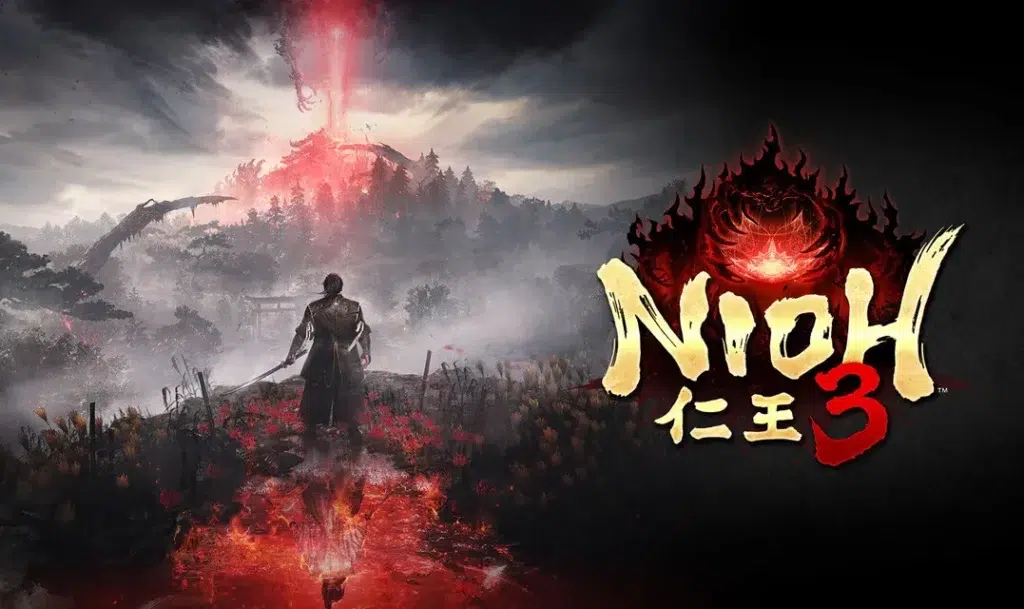
Nioh 3 review – Brutal, Brilliant, Must-Play Combat on PC
Team Ninja didn’t just add “more Nioh.” It re-frames the entire loop around an open-field structure and a two-style combat identity that finally makes the series feel like it has a single, confident thesis: master aggression, then choose the flavor of violence that fits your hands. The result is the most complete version of what Nioh has always promised – speed, precision, and build depth that rewards obsession.
What Nioh 3 is trying to be
The first two games were mission-driven pressure cookers. Tight zones, deliberate shortcuts, shrines like oxygen tanks, and a loop that made you think in runs. Nioh 3 pivots to “open fields” – not a pure sandbox, but a large connected structure that gives you a more elastic difficulty curve. You can scout, detour, farm, chase optional threats, and return stronger. That alone changes the tone of the game.
But the real headline is the dual identity at the center of combat: Samurai and Ninja styles that aren’t cosmetic. They are different movement philosophies, different risk profiles, and different ways to convert execution into damage. In Nioh 3, the series finally stops asking “which weapon do you main?” and starts asking “what kind of player are you today?”
Nioh 3 review – Combat and Style Shift
If you came here for the answer to one question – “Is the combat still the best in the genre?” – yes. It is still the reason you show up, and Nioh 3 makes that reason stronger.
The Samurai style feels like the “pure Nioh” baseline. You are thinking in stances, Ki control, spacing, and the rhythm of pressure. The game’s combat DNA is still about decision-making under stress, and Samurai style is where that clarity lives: stable defense, consistent fundamentals, and a toolset designed to win with discipline.
The Ninja style is the disruptor. Faster movement language, more emphasis on positioning, cleaner “get in, get out” punishment windows, and a play pattern that leans closer to character-action tempo. Where Samurai style wants you to solve fights, Ninja style wants you to style on them – but only if your timing is real.
The best part is not that both exist. It is that switching creates a third layer: you are not locked into one mindset. You can open a fight as Samurai, stabilize it, learn the enemy’s tells, then flip to Ninja when you’ve measured the spacing. Or do the opposite: go Ninja to break posture and momentum, then Samurai to cash out damage with safer confirms. Nioh 3’s “style” system is not a gimmick; it is an answer to one of the oldest problems in skill-heavy action RPGs: sometimes the right play is not “do more damage,” it is “change how the fight is shaped.”
Enemy design, boss pressure, and difficulty texture
Nioh has always been at its best when it forces you to earn your right to be greedy. Nioh 3 continues that tradition with bosses and elite enemies that punish autopilot. The difference is how the open-field structure affects pacing. In older Nioh, walls were walls. Here, difficulty becomes more like weather: it rolls in and out. You can wander into a Crucible-like challenge pocket, get humbled, and leave. That elasticity makes the game feel more approachable without making it “easy.”
The trade-off is balance perception. When a game gives you more escape routes, players will disagree harder on difficulty. Some will call it smoother and more welcoming, others will call the curve inconsistent, especially if co-op and certain builds soften edges earlier than expected. In this Nioh 3 review context, that is not a flaw so much as a consequence of freedom. Nioh 3 gives you more ways to be smart. That also means it gives you more ways to accidentally delete the intended tension.
Co-op, friction, and the “flow state” factor
Nioh’s combat is about flow state – the moment your hands stop translating and start speaking. Co-op can either amplify that or dilute it. Nioh 3’s larger spaces and modern co-op sensibilities make it easier to stay with friends and keep momentum, which is great. But co-op also risks flattening difficulty in ways that make some encounters feel less surgical.
If you are buying Nioh 3 for solo mastery, it delivers. If you are buying it for co-op chaos, it also delivers. Just understand those are two different games wearing the same armor.
Open fields – the best change, with one big risk
Nioh 3’s open fields do something smart: they don’t try to replace “missions,” they try to contextualize them. You still get concentrated combat spaces and classic level design beats, but the connective tissue gives you a reason to explore that isn’t just sightseeing.
Exploration rewards feel more meaningful here than in many action RPGs because Nioh’s progression is inherently modular. You are always building a toolbox. Finding something that unlocks a new route of expression (a skill path, a new synergy, a better version of a familiar tool) matters more than finding “another +1 sword.” When Nioh 3 gets this right, it feels like an action RPG that respects your time: exploring makes you more lethal, not just more decorated.
The risk is bloat. Nioh has always had a complicated relationship with loot and inventory management. When you expand the world, you expand the surface area for that friction. If you already found Nioh 2’s loot showers exhausting, Nioh 3 can test your patience unless you engage with sorting tools, auto-loot behaviors, and disposal settings early. This is the one place where the game’s ambition can work against its elegance: the combat wants your full attention, but the menu ecosystem sometimes wants it too.
Progression, builds, and long-term addiction
Nioh has never been about “one build.” It is about building the ability to rebuild. Nioh 3 leans into that philosophy with a system that encourages experimentation, including quality-of-life support for respec behavior and build iteration.
The best builds in Nioh are not just “highest DPS.” They are playstyles. Nioh 3’s dual-style identity makes that truer than ever. Instead of a build being “weapon + set bonus,” it becomes “weapon + style + tempo.” That is the design leap. Your choices are not only about damage type and buffs, they are about how you want to inhabit time in a fight.
For veterans, this is the best kind of problem: too many options, all of them viable if you understand the engine. For newcomers, it can still look intimidating. But the open-field structure is the bridge. It lets you learn systems without being forced to brute-force a wall at the exact moment you are least ready.
Story, setting, and tone
Let’s be honest: people do not come to Nioh for a prestige narrative. They come for atmosphere, momentum, and the myth-history remix that makes bosses feel like folklore come alive.
Nioh 3 keeps that identity. You get a historical fantasy framework, recognizable figures twisted through yokai logic, and a story that exists to justify escalation. It can be genuinely stylish, occasionally evocative, and rarely subtle. It also can be uneven in delivery, especially if you want clean character arcs rather than a parade of cool moments.
Where Nioh 3 tends to win is tone. It understands the fantasy: you are not just surviving Japan’s demon-haunted past, you are sprinting through it like an apex predator with a toolkit. If you can accept story as structure, not center stage, it does the job. If you wanted the narrative to finally become the equal partner to combat, this is not that transformation.
Audio, feedback, and combat “feel”
A great action game lives and dies by feedback. Hit reactions, audio cues, animation cancel rules, and the micro-timing that tells your brain “that was clean.” Nioh has always been elite at this, and Nioh 3 keeps the series in that top tier.
The most important compliment you can pay Nioh 3 is that it makes you want to fight even when you do not need to. That is not progression talking. That is feel talking.
PC performance and settings – strong potential, real caveats
A PC release day-one is a huge deal for this series. It also means the PC conversation is louder, messier, and more honest.
The consensus shape looks like this: when Nioh 3 is behaving, it runs and feels excellent. The combat benefits massively from smooth frame pacing and higher refresh. But the PC version has enough reports of stutter, uneven frame pacing in specific scenarios, and heavier-than-expected CPU behavior that it cannot be described as flawless at launch.
If you are playing on a high-end PC, you are likely to brute-force many issues. If you are on a mid-range machine, you will care more about the quality of optimization, not just raw settings. Either way, this is the kind of game where one patch can change the entire conversation, and early adopters should keep expectations calibrated.
Practical advice for PC players buying on day one:
- Prioritize stability over ultra settings if you notice traversal stutter in open fields.
- Treat shadows, volumetrics, and heavy post-processing as your first “give” knobs.
- If the game offers resolution scaling or upscaling options, use them intelligently rather than chasing native at all costs.
- Cap your frame rate to a stable target if frame pacing feels uneven. A consistent 60 can feel better than a swinging 90-120 in a game this timing-sensitive.
This matters more in Nioh than in most RPGs because the combat is not forgiving about timing. Your inputs are part of the build.
Comparisons – Nioh 1, Nioh 2, and Team Ninja’s recent era
Nioh 1 was the raw statement: aggressive Soulslike structure with a combat system that already felt like it belonged to another genre. Nioh 2 refined that and deepened the build ecosystem, sometimes at the cost of clarity and cleanliness in the long-term loot loop.
Nioh 3 feels like the synthesis:
- It keeps the combat obsession intact.
- It modernizes structure with open fields that soften the harshest onboarding edges.
- It adds a dual-style identity that makes buildcraft feel less like spreadsheets and more like self-expression.
You can also see Team Ninja’s experiments feeding back into the mainline series. Elements that felt like side quests in other releases now read like R&D that finally paid off. This is not just “Nioh again.” This is Team Ninja consolidating a decade of ideas into one clean, violent language.
Verdict
Nioh 3 is the most complete expression of Team Ninja’s combat design. The open-field pivot gives the game a smarter difficulty texture and a more modern sense of “adventure,” while the Samurai-Ninja style system adds a layer of identity that Nioh has never had before. When it is in motion, it is elite – the kind of action RPG that makes other games feel slow and under-committed.
The reasons it is not a perfect recommendation are also consistent with the series’ history: technical roughness for some players, and an inventory and loot ecosystem that can still become friction if you do not manage it proactively. Those issues matter, but they do not erase the truth at the center.
If you love hardcore action RPGs, Nioh 3 is a must-play. If you love Nioh specifically, this is the entry that finally feels like the series reached its “final form.”
Noobidio Score: 9/10
If you want more PC-focused long reads, browse the Noobidio Reviews hub for our latest verdicts.
For more details, read PlayStation Blog’s Nioh 3 demo and launch details for a full breakdown and expert analysis.
0 Comments
To keep discussions clean, commenting requires a Noobidio account.